VOLUME 26, ISSUE 7 | FEBRUARY 13, 2026 |
DON'T FREAK An article came out this week by the New York Times about how romance author Coral Hart plugged her books into AI then started churning out a book in 45 minutes, groomed by her via her own work
and carefully worded parameters. She already did 10-12 books a year (another discussion altogether). Per this article: "Last year, she produced more than 200 romance novels in a range of subgenres, from dark mafia romances to sweet teen stories, and self-published them on Amazon. None were huge blockbusters, but collectively, they sold around 50,000 copies, earning Ms. Hart six figures." To make matters worse, she now teaches other authors how to do the same. You can call her a traitor, if you like, or a few other words, but she is breaking no laws. No, that doesn't mean you have to worry or change a thing. Do NOT let that discourage you from writing your stories in your voice...without AI. Do NOT let her quasi-AI success demoralize
you. Remember why you write. She is producing widgets, for lack of a better word. The quality isn't phenomenal, if you read the entire article. But whether it is or isn't, until AI becomes the norm, and publishers no longer want original work, you still write your stories. But there will always be readers who don't want AI material. Be one of the writers who can be trusted
and respected for being real. |
THE AFTERTASTE
On my, I love a good quote. I adore when a few succinct words ram an idea home. "The aftertaste is what they remember." That line stopped me in my tracks. We've heard this mentioned as a lingering thought, or the story that sticks with you after the last page is read. These six words could easily compete (and win) in one of those six-word Hemingway contests you see all the time. Remember Hemingway's catalyst? "For sale: baby shoes, never worn." Every word carries its weight. The person who mentioned
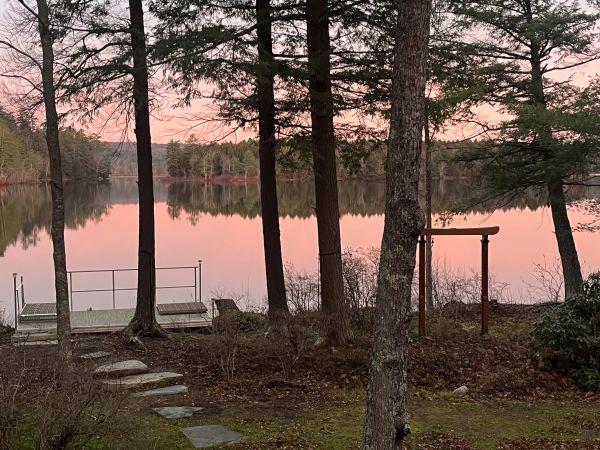
the aftertaste quote is a contemporary author named Paul Strickland. He teaches writing, and recently I read his newsletter on endings (which I'm sure he teaches in a course), and that is what I walked away with. He even takes it further in saying, "Great stories don’t just END – they leave something useful behind." If you wrote every story with this in mind, imagine how it will make you edit yourself, cut excess words, and constantly ponder whether the words you are writing carry their weight. (No, not an ad. I just loved his message.) The Maranacook Lake writing retreat (May 9-16, 2026) is an opportunity for you to get away from your daily activities and clear your mind and heart for writing in an exceptionally beautiful part of Maine. It's not a workshop: this is space for you: to take on a project you've been putting off,
to get a new perspective on past work... or to start something entirely new. Because of this, writers of all genres, from nonfiction to poetry, are encouraged to attend. Mornings are spent writing; afternoons will feature optional activities and guest speakers; in the evenings you can share your work with others if you choose. There will be time to go for walks in the woods, to swim in the lake, to sit around the firepit and
talk... or just dream. The program fee is $550, with accommodation costs (which include all meals) varying depending on the room you choose. More information and registration is at www.jeannettedebeauvoir.com/retreat. -March 2, 2026 - Night Harbor Book Club, Chapin, SC (attending, not presenting) -Apr 15, 2026 - Book Club, Noon to 2 PM - Elgin, SC (members
only) -June 4, 2026 - Chapin Library, Chapin, SC - 1-2 PM -July 25, 2026 - Smoking Guns Sisters in Crime Zoom meeting - Noon - Zoom
Email: [email protected] to schedule events, online or otherwise. “It is the great triumph of genius to make the common appear novel.” — Johann Wolfgang von Goethe (1749–1832)
<<If you have a success story you believe was prompted by FundsforWriters, please share with us! Send to [email protected] >> Could You Make Money as a Bid Writer?
By Dan Brotzel If you look at ads for writing work, in among all the AI trainers and content marketing executives, there are always lots for ‘bid writer’. How
easy is it to break into this kind of work and what does it involve? When businesses – from construction firms to healthcare providers to digital agencies – need to win contracts, grants, or funding, they typically submit detailed proposals, known as bids or tenders, to explain why they’re the best choice. That’s where a bid writer comes in. These proposals can be huge and
complex, and the contracts worth millions. Whether it’s bidding to manage the media budget for a global coffee brand, overhaul the air conditioning in a sports complex, or become the insurance partner for a mobile phone reseller, the supplier has to explain their approach and suitability in great detail, supported by case studies and references. They may have to show they meet certain eligibility criteria, from data privacy and diversity policies to evidence of financial probity and regulatory
compliance. The bid writer manages the process of pulling all this together – interrogating requirements, gathering information from across the business, and presenting the response in a clear, persuasive way. They have to make sure the whole thing hangs together, interweaving words from many others. This can be quite tricky, I’ve found, as different contributions can vary
hugely. Some case studies may be two lines long and others 1000 words. And the data person might write in a very technical style, while the marketing sections are all fluffy and emotive. ‘Succinctness is key – you need to be able to write concise, clear copy which answers the question you’re being asked in as few words as possible,’ says Kate Ingham-Smith. Founder of Keep it Simple Copywriting, Kate has worked as both an in-house and freelance bid writer for nearly a decade. ‘Before I became a freelance copywriter in 2020, I worked as a marketing manager for a lift maintenance company,’ she recalls. ‘The marketing department managed all the bid writing on behalf of the company,
which I wasn’t expecting! But I enjoyed the work, and when I went freelance, I decided to offer bid writing as part of my service package.’ Like Kate, many bid writers fall into the work through sector experience and the right skillset. Others apply directly for junior bid writing roles. But, as Indeed’s advice notes, you don’t always need previous experience. ‘The business you work for may decide to start applying for contracts, and needs someone to coordinate the work,’ says Kate. ‘By taking on the responsibility, you gain the experience you need to move into a more senior
role in the future.’ What skills do you need? ‘You need to be a decent project manager with good verbal and written communication skills,’ says Kate. ‘You need to make sure everyone provides the information needed well before the deadline. Bid writing definitely makes you a lot more assertive!’
Sector knowledge can help, but as AutogenAI’s overview points out, the real essentials are analytical thinking, communication, and persuasion. Many skills are transferable from fields like teaching, journalism, law, or project management. ‘I once applied to write a bid in a sector I didn’t have experience in,’ recalls Kate. ‘I explained that while I hadn’t worked in that
industry before, bid writing had given me lots of soft skills that would help me create a highly impactful tender document. I got the job.’
For more on skills, roles and challenges, see these guides from Tendium and Executive Compass.
Freelance or employed? ‘I’ve done both during my career,’ Kate says. ‘I’d probably say I enjoy freelancing more as I get a better work-life balance. If I’m stuck on a question, I can
go for a walk and come back to it later.’ As Thornton & Lowe’s guide highlights, freelance bid writers are in demand because many companies don’t have the overhead for permanent staff, but still of course need always to be pitching for new business. It's not the
most glamorous form of writing, but skilled bid writers are sought after and well rewarded because they directly impact an organization’s bottom line. If you enjoy structured, persuasive writing and thrive under pressure, this could be a smart way to monetize your writing talent. Dan Brotzel’s latest novels are Thank You For The Days and The Wolf in the Woods. He also writes widely on Medium
GUTSY GREAT NOVELIST CHAPTER ONE PRIZE $20 ENTRY FEE. Submissions open February 3 – Mar 3, 2026 (5PM ET). The Gutsy Great Novelist Chapter One Prize is awarded for an outstanding opening chapter of an unpublished novel. First prize is $1,000; 2nd is $500; 3rd is $250. The prize is open internationally to anyone over 18 writing a novel in English in any genre for
adult or YA readers. INKSPOT FLASH FICTION WRITING COMPETITION
https://inkspotpublishing.com/competition/500-for-500-flash-fiction-2026/
£10 ENTRY FEE. Deadline May 17, 2026. First place is £500 for 500 words. We’re
looking forward to receiving your flash fiction short stories, with a word count not exceeding 500 words. Short scripts are also welcome. We’re banking on receiving some excellent entries, as we’re planning to compile our favourites into an e-book, which will also be available in print, as POD. Writers from anywhere in the world can submit. Writers on low incomes may send a request to enter the short story competition for free by emailing [email protected] by Sunday 26th April
2026. In the event that Inkspot Publishing compiles a collection of entries as an e-book and/or POD, stories will only be included with the explicit permission of the author. WRITER'S DIGEST ANNUAL COMPETITION
https://writersdigest.submittable.com/submit/338552/annual-writing-competition-2026
ENTRY FEE $20-$35. Early bird deadline May 4, 2026. WD's 95th Annual Writing Competition is now accepting entries. The grand prize winner will receive $5,000 in cash, a trip to the Writer's Digest Annual Conference, and an interview for a feature article in our magazine. First place winners in each category receive $1,000, second place winners in each category win $500, and
on and on! Enter in any and all of the following categories: inspirational/spiritual, memoirs/personal essays, nonfiction essay or article, genre short story (think romance, thriller, mystery, sci-fi, etc.), mainstream/literary short story, rhyming poetry, non-rhyming poetry, humor, children's/young adult fiction. KINSMAN QUARTERLY ANTHOLOGY CONTEST
https://www.kinsmanquarterly.org/contests
NO ENTRY FEE. Deadline February 28, 2026. Theme: Voices of Mixed Heritage. Submit essays, fiction, or poetry exploring themes of multicultural or third-culture identity, love, belonging, home life, and pain. We seek heartfelt reflections on living between worlds. Win up to $500 and publication in Kinsman's upcoming anthology. KINSMAN MEMOIR IN VERSE AWARD
https://www.kinsmanquarterly.org/contests
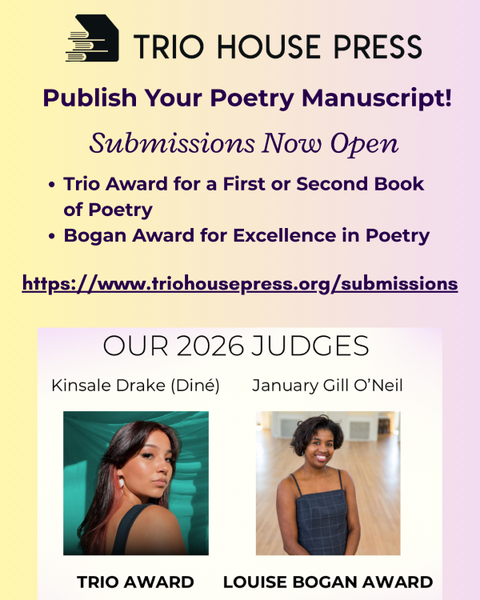
$22 ENTRY FEE. Deadline March 31, 2026. Submit your full-length poetry collection (50–150 pages) for the Memoir in Verse Award, celebrating one BIPOC or underrepresented poet with a thematic collection,
capturing a personal journey or season of life. Selected poet receives publication and a $1,500 licensing award. HAYDEN'S FERRY REVIEW FICTION AND POETRY CONTEST
https://haydensferryreview.com/hfrcontest
$15 ENTRY FEE. Deadline February 28, 2026. There will be two prizes
of $1000 each and publication in HFR (online in summer 2026 and in the fall/winter 2026 print issue) for a poem or a group of poems and a work of fiction. A runner-up in each category will receive $250 and publication. All entries are considered for publication. Submit 1-3 poems totaling up to 10 pages or a short story or novel excerpt of up to 20 pages.
GRANTS / FELLOWSHIP / CROWDFUNDING UTAH ARTIST FELLOWSHIPS
https://artsandmuseums.utah.gov/fellowship/
Deadline March 6, 2026. The Utah Artist Fellowships are $5,000 awards that recognize the careers of Utah artists demonstrating exceptional creativity in their
fields. Fellows are chosen by out-of-state, nationally renowned arts professionals. Selections are based on evaluation of application narratives as well as work samples from the past five years. Fellowships will be awarded in each of these categories: Literary Arts – Five fellowships / Performing Arts (Music 2026) – Five fellowships / Visual Arts & Design Arts – Eight fellowships. INDIANA ARTS PROJECT SUPPORT
https://www.in.gov/arts/programs-and-services/funding/arts-project-support/
Arts Project Support (APS) grants provide funding to support a public-facing short-term arts project or a series of arts activities. Examples include performances; exhibits; arts festivals; arts and cultural planning; arts learning for
specific populations such as older adults or youth; public art or some other arts-based or arts-serving activity. The goal of the Arts Project Support grant program is to provide Indiana’s people and communities access to arts experiences. Arts Project Support will be offered twice in Fiscal Year 2027. The Spring Application Cycle deadline is 3/5/2026 for the grant period of 7/1/26-6/30/27. The Fall Application Cycle deadline is 9/3/26 for the grant period of
1/1/27-12/31/27. (Individuals must apply in conjunction with an arts or public organization.) FURTHERMORE GRANT FOR NONFICTION
https://furthermore.org/
Deadline March 1, 2026. Supports the English-language publication of nonfiction books concerning the arts, history, and the natural and
built environments. It seeks work that will appeal to an informed general audience and give evidence of high standards in writing, design, and production. Grant awards range from $1,500 to $12,000; funds may be applied to specific publication components such as writing, research, editing, indexing, design, illustration, photography, and printing and binding. Preference is given to book projects that have a publisher’s commitment and feasible distribution plans in place. Recipients of Furthermore
grants are located across the United States and occasionally abroad. Applicants must be 501(c)(3) organizations; applications from individuals are not accepted. DE GROOT VISITING FELLOWSHIPS
https://degrootfoundation.org/de-groot-visiting-fellowship-american-library-in-paris/
Deadline March 1, 2026. The theme for 2026-2027 is Letters Home. This theme explores the love language of letters and the many voices who write about home from far away, whether home is a place, a person, or a time. Letters Home encourages Fellows to explore different perspectives—nostalgic, questioning, tender, critical—in the return through ink and imagination to
places left behind. Programs could be around topics such as the changing meaning of “home,” literary letters and the creative force of nostalgia, exile and the epistolary voice, or the politics of correspondence. The de Groot Visiting Fellowship Program at the American Library in Paris supports writers, thinkers, and scholars across disciplines who advance dialogue, creativity, and cross-cultural understanding. THE K BLUNDELL
TRUST
https://societyofauthors.org/grants/kblundelltrust/
Deadline March 1, 2026. The K Blundell Trust awards grants to British authors under the age of 40 whose work aims to increase social awareness. The fund is open to authors resident in the United Kingdom who have previously had a work of which they are the sole
author published. The K Blundell Trust accepts submissions for fiction, non-fiction, poetry and script projects. Grants are usually between £2,000-£3,000.
HOTHOUSE
https://hothouse.substack.com/about
Hothouse publishes investigative reporting about climate solutions. Each month, we publish two deep dives on a topic—either reported features or essays—that analyze the people and projects behind climate
solutions. The topics we’ve covered so far include seafood, investing, changing careers, electric vehicles, funerals, and (beyond) organic agriculture. We’re open to any and all ideas. We pay 50c per word. Profiles are up to 800 words long and features are up to 1500 words. Hothouse is primarily for US and UK audiences. THE LEMONWOOD QUARTERLY
https://lemonwoodquarterly.com/submit/
$4 SUBMISSION FEE. The Lemonwood Quarterly seeks the best English language short stories and plays we can find. We do not publish poetry, flash fiction, nonfiction prose, book reviews, or interviews. We are looking for superbly written stories and play pieces between 2,000 and 10,000 words. We especially seek out stories with female protagonists who are well into adulthood. There’s no minimum age
requirement, but if your protagonist is not at least over thirty years old or so, it could be difficult for them to carry forward the type of stories we aim to publish. The current rate is $200 for every story or play published in our magazine. YELLOW SCENE MAGAZINE
https://yellowscene.com/contact/
https://yellowscene.com/about/
https://app.qwoted.com/job_postings/yellow-scene-magazine-freelance-writers-investigative-journalists-and-beat-reporters-remote-b45e8635-452c-4da4-b501-8454e2c521d8
Yellow Scene Magazine may not be a national publication, but we have been around 20 years as an Independent in Boulder County. We cover arts, entertainment, news, politics, social issues, education, healthcare, science, oil & gas, elections, food and drink, cannabis, and whatever else we think is worthy to
talk about. If out of state, then please indicate how you go about researching your subjects to get that insider’s view. SIGNAL HILL
https://airtable.com/appk8sUVIkVwd7H4C/pagPD2ZFWlw5rFSTd/form
https://www.signalhill.fm/information/
Signal Hill is an audio magazine. We publish audio documentaries of all kinds: reporting, essays, shorts, profiles, dispatches, reviews, and other things we haven’t named yet. We review pitches on a quarterly basis. We pay $500 - $3,000 for stories, depending on the scale of the work and the amount of production support needed. Pitches received this month
(February) will be considered for Issue Four and beyond. THE APPEAL
https://theappeal.org/how-to-pitch-the-appeal/
The Appeal is a nonprofit newsroom dedicated to exposing how the U.S. criminal legal system fails to keep people safe and perpetuates harm. The Appeal’s stories and
weekly newsletter cover the criminal legal system through compelling original reporting that examines systemic issues, brings injustices to light, helps readers understand complex issues and the role of politics in policy, tracks progress, and analyzes emerging solutions. We pay $1/ commissioned word for reported and first-person pieces up to 2,000 words. Payment for longer pieces is negotiable. Newsletter columns are commissioned at 800 words. THE CALDWELL AGENCY
https://thecaldwellagency.com/about-us
Queer and Black woman-owned, The Caldwell Agency specializes in literary representation and management with a personal touch. See each agent to see what is desired at this time. Pitch only one
agent at a time. LUCINDA LITERARY
https://lucindaliterary.com/submissions/
To learn more about the genres we represent, please visit our agent bios and browse our list of books. Lucinda Literary looks for 3 key criteria when considering new clients for both fiction and nonfiction: a big
idea, distinctive writing, and a convincing platform. These keys are further explained in the book Get Signed: Find an Agent, Land a Book Deal, and Become a Published Author, written by Lucinda Halpern. We highly recommend reading this before querying our agency. If you are still working to crystallize your book’s big idea, genre, comparative titles, pitch, or author platform, we invite you to explore The Lucinda Literary Academy, our coaching and education hub for aspiring authors. Through our
Zoom consultations, workshops, and collaboration services, you’ll gain direct access to publishing experts who can help you shape your book and strategy for market success. HYPONYMOUS LITERARY
https://www.hyponymous.com/
We’re always excited to connect with authors who bring compelling voices, sharp
ideas, and distinctive perspectives to the literary landscape. 3 SEAS LITERARY AGENCY
https://www.threeseasagency.com/submissions
Visit each agent's page to see who your work best aligns with! We do share submissions within the agency if we think that you may be a better fit with another
agent at 3 Seas Literary Agency. We represent authors who write romance, women’s fiction, science fiction/fantasy, thrillers, nonfiction, graphic novels, picture books, middle grade, and young adult. ANISSA DORSEY LITERARY
https://manuscriptwishlist.com/mswl-post/anissa-dorsey/
This agent accepts the following types of submissions. Fiction: Action/Adventure, Children's, Commercial, Crime, Gothic, Graphic Novel, Horror, Humor, LGBTQ, Literary, Middle Grade, Mystery, New Adult, Psychological Thriller, Romance, Thriller, Women’s Fiction, Young Adult. Non-Fiction: History, Humor, Illustrated, Journalism, LGBTQ, Memoir, Pop Culture, True Crime. Favorite sub-genres: LGBT YA, Noir, Paranormal,
Psychological Thrillers, Romantic Suspense, horror, love stories.
Please forward the newsletter in its entirety. To reprint any editorials, contact [email protected] for permission. Do not assume that acknowledgements listed in your publication is considered a valid right to publish out of ours.
C. Hope Clark
E-mail: [email protected]
140-A Amicks Ferry Road #4
Chapin, SC 29036
http://www.fundsforwriters.com Copyright 2000-2025, C. Hope Clark
ISSN: 1533-1326 Our subscriber list is NOT made available to others. Use information listed at your own risk. FundsforWriters gives no warranty to completeness, accuracy, or fitness of the markets, contests, and grants although research is done to the best of our
ability. FundsforWriters finds open submission calls, contests, and markets from a wide variety of sources, including Erika Dreifus' Practicing Writer
newsletter, Erica Verrillo's blog, Authors Publish, Poets & Writers, Duotrope, Winning Writers, Write Jobs Plus, LinkedIn Jobs, Emily Stoddard, and other newsletters and online sites. Many announcements are submitted directly to FundsforWriters. All must be paying opportunities. Contests must pay a minimum of $200 first place. Submit potential listings to [email protected] **Note that FundsforWriters.com places paid advertising in this newsletter. ALL ads are related to writers and the business of writing, screened by FundsforWriters to make sure the information is suitable for writers and their endeavors to improve their careers. While the mailing list is
not sold to third parties, other parties do advertise in the newsletter, to include the occasional solo ad. You will not receive this newsletter without your permission. It's physically impossible since recipients must opt-in, giving us permission to send the newsletter. If at any time you no longer wish to receive the newsletter, click the UNSUBSCRIBE link at the bottom of each newsletter. We want you to enjoy this newsletter at your pleasure, not be forced to read anything you do not wish to
receive. Direct any complaints, suggestions, and accolades to Hope Clark at [email protected]. We are an anti-spam site. | |
|
|
|