VOLUME 26, ISSUE 6 | FEBRUARY 6, 2026 |
IS WRITING YOUR GO-TO PLACE? I can speak to a friend in need and via empathy, soak in their pain. It clings to me for hours if not a day or two. Some may think that's cool. Others realize it can be quite the emotional burden. I've learned that when I'm down, out of sorts, or spending too long dwelling on things that don't deserve my attention, then for my own personal health, I retreat to the keyboard. It's why I love having a series to dive back into. It's like returning home. I can also talk the talk with my husband, who has experienced every word of every story I've written. We talk
about Callie or Slade or Sophie like they are in the room. Sometimes, though, I retreat to FundsforWriters. The essays help me dissect things in some situations, but at other times, it's just the familiarity of that world that soothes. Writing can be your balm, your peace, your axis coming back to center. . . if you let it. Bring it to the front and center of your
life, and you might find out just how medicinal it can be. |
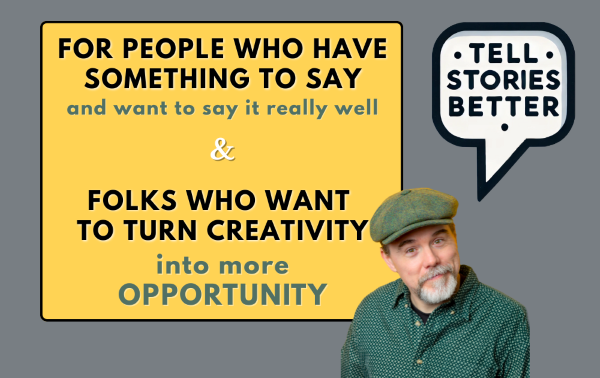
I'm Doing Creative Work. Why Isn't It Creating More Opportunity? For working writers and storytellers, effort and originality are rarely the problem.
Craft is what turns creative work into something other people want to say yes to. Interesting is a skill. I write a free weekly newsletter for working writers and storytellers who want their creative work to travel further. It's called Tell Stories Better. Each issue focuses
on one concrete craft decision or situation: the small, often invisible choices around structure, pacing, emphasis, and finish that quietly shape how work is received. Practical craft you can apply immediately to the work you're already making. Written by a working writer and professional performance storyteller and coach with years of experience helping creatives turn strong ideas into compelling work. Subscribe if you want your creativity to create more opportunity. Subscribe here: TELL STORIES BETTER A NEW SPIN ON AI
This little story smacks of using CliffsNotes in high school. (I know, I'm dating myself.) You might know these abridged treatments of books as SparkNotes, LitCharts, eNotes, and Shmoop. These abbreviated versions of literature and classics give the reader enough to know what the book was about, what the themes were, and
what were the strong takeaways. Recently a relatively fresh writer sent ARCs of her book out for reviews, so they'd be ready to post on release day. Nothing wrong with that. Like many authors not wanting to pay the cost of print ARCs, she sent ebook copies. Nothing wrong with that either. One of her reviewers used AI to summarize the book and write the review. Voila. No
reading. Regular ChatGPT doesn't allow an entire book, but there are paid versions of AI that do. That saddens me. It infuriated her. Like her, I'd want readers to actually read my work and offer true opinion on voice, style, grammar, plot, character, etc. Can you get more reviews this way? I mean, if you told
people they could use AI to do this? Sure you can. Is that what you want? Depends on you. As for me, I'd omit this reader next time I sent out ARCs for reviews. AI is here, people. And folks are getting better and better at using it. And the ethical lines are blurring.
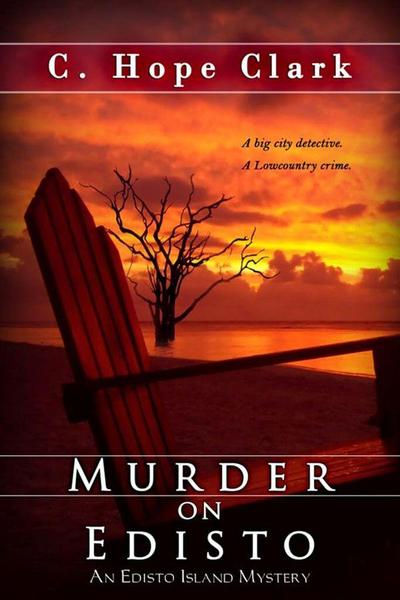
Book One in The Edisto Island Mysteries. Her husband murdered by the Russian mob, Boston detective Callie Jean Morgan relinquishes her badge to return to the family vacation home in South Carolina. But the day they arrive on Edisto Beach, Callie finds her childhood mentor murdered. Her fragile sanity is threatened when the murderer
taunts her and repeatedly violates what was to be her sanctuary home. Callie loses her fight to walk away from law enforcement as she becomes the only person able to pursue the culprit who’s turned the coastal paradise into a paranoid patch of sand where nobody’s safe. But what will it cost her? www.chopeclark.com -Feb 10, 2026 - Book Club, Mt. Horeb Church, Lexington, SC - noon-2PM -Apr 15, 2026 - Book Club, Noon to 2 PM - Elgin, SC (members only) -June 4, 2026 - Chapin Library, Chapin, SC - 1-2 PM -July 25, 2026 - Smoking Guns Sisters in Crime Zoom meeting - Noon - Zoom
Email: [email protected] to schedule events, online or otherwise. “A little knowledge that acts is worth infinitely more than much knowledge that is idle.” — Kahlil Gibran (1883–1931)
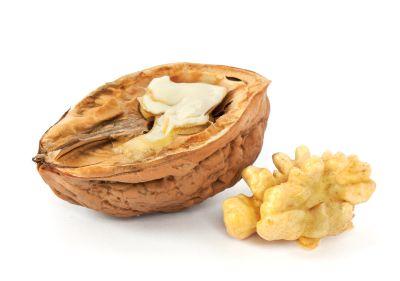
<<If you have a success story you believe was prompted by FundsforWriters, please share with us! Send to [email protected] >> Can You Explain Your Writing Self in a Nutshell?
By Dan Brotzel As writers, it’s vital to be able to summarise what we offer in a few brief interesting words – as much for ourselves as for the
readers we want to reach. Whenever I write any article, let alone a book, I begin by drafting a rough lede which sets out the essence of the piece, and why it might be worth reading – part summary, part hook. Then, as I write, I can sense-check my emerging copy to keep me on track. In the same way, developing a nutshell statement for yourself as an author is a helpful
shortcut to tell people who you are as a writer and what you offer. There are lots of terms people use for this – author brand statement, USP (unique selling proposition), elevator pitch, but the basic idea is very simple. It’s an instant self-marketing tool that helps everyone from readers to bookstore managers to agents to get a quick sense of what you’re about. The words aren’t many but the thinking behind them can be
intense. You boil down what you do and make it appealing to people. Craft different versions and try them out on friends and family. My overall nutshell statement is ‘funny-sad author’. It’s a phrase I snagged from a couple of early beta readers. It nails the dark humour I go in for and is more distinctive (and less arrogant) than baldly claiming to be ‘funny’ or ‘comic’, which tends to make people say, ‘Go on – make
me laugh then.’ (It’s also less depressing than just ‘sad’). Here’s a longer version: ‘I write darkly humorous stories about dodgy gurus, lonely eccentrics and crap dads’. Be specific and personal. Your statement needs to help you stand out from the huge market of other authors. Avoid blah wording that could apply to anyone – try adding in details of subgenre, target audience, or desired outcome, e.g. ‘Texan-born
history nerd who spins epic Civil War romances’ or ‘I write YA adventure fantasy to empower teen girls to be the heroes of their own lives’. That one comes from this Book Designer article, which has lots more tips and examples. Add a splash of personality or humour. ‘Builder of disappointing post-apocalyptic worlds, cracker of bad futuristic dad jokes’ tells me a lot more than ‘comic scifi author’. Put it everywhere. Once you’ve developed a statement you’re happy with it, use it everywhere. Pop it in your email signature, your social profiles, your Medium and Substack bio, your Amazon author info –
anywhere people might find you. Develop different lengths. In some cases (e.g. an email signature) only 2-3 words is best, while elsewhere you may be able to use a sentence (e.g. signing off a guest post). Think too of a short para you could use when introducing yourself in person: what would you say to sell yourself and your work at an agency speed-dating event, for example? Develop different statements for different hats. Many writers wear different hats, and it’s useful to have nutshell statements for each of them. You might write in completely different genres or different series. For example, Hope’s Carolina Slade Mystery Series is nutshelled ‘Justice Her Way’, while
The Craven County Mysteries are ‘Southern Private Investigations’. You may also have a writing day job that’s very different but still needs promoting. You may be a ‘crossword-compiling author of fiendish Yorkshire-based cozy mysteries’ in your own time, but a ‘Google-trained B2B scribe specialising in enterprise tech and SaaS scale-ups’ as a bread-and-butter freelancer. Check out LinkedIn to compare examples. Type in ‘writer’ under
People and see which statements stand out: ‘Journalist and producer specialising in automotive content’ says a lot more than ‘freelance writer’.
Use it everywhere. Once you have your wording, use it everywhere. Like an ad jingle or slogan, it gains power and memorability through repetition. Finally, you can think of your nutshell statement as a north star for your writing ambitions too. Use it to capture what you really want
to do and to choose which projects to prioritise, thus ensuring that your work stays aligned with your ambitions.
Dan Brotzel’s latest novels are Thank You For The Days and The Wolf in the Woods. He also writes widely on Medium
GUTSY GREAT NOVELIST CHAPTER ONE PRIZE $20 ENTRY FEE. Submissions open February 3 – Mar 3, 2026 (5PM ET). The Gutsy Great Novelist Chapter One Prize is awarded for an outstanding opening chapter of an unpublished novel. First prize is $1,000; 2nd is $500; 3rd is $250. The prize is open internationally to anyone over 18 writing a novel in English in any genre for adult or YA
readers. MATTHEW POWER LITERARY AWARD
https://nyujournalism.submittable.com/submit/341429/2026-matthew-power-literary-reporting-award
NO ENTRY FEE. Deadline February 22, 2026. The
monetary award will be distributed $7,500 upon announcement of the winning proposal; and $7,500 upon completion and acceptance by the Award committee. The Institute expects the completed work to appear in an English-language print or audio publication or of strong reputation. Ineligible to apply are NYU affiliates, NYU graduates with degrees dated within 2 years of the submission deadline, and journalists holding staff positions at established media outlets that are in a position to fund such
projects on their own. WRITERS ONLINE POETRY CONTEST
https://www.writers-online.co.uk/writing-competitions/to-the-sea/
£ 8.50 ENTRY FEE. Deadline March 15, 2026. Theme: To the Sea. Make waves with your poems that conjure any aspect of the sea that
appeals to your imagination - rhymed, unrhymed, blank verse, prose poems - as long as it's marine-themed and. Under 40 lines we want to read it. The winner will receive £100, with £50 for the runner-up. Both poems will be published in Writing Magazine. HEFNER HEITZ KANSAS BOOK AWARD
https://www.washburn.edu/library/ksbookaward/index.html
NO ENTRY FEE. Deadline February 17, 2026. The Hefner Heitz Kansas Book Award "in Poetry" "in Fiction" and "in Creative Nonfiction" alternates yearly for each genre. The prize, of $1,000, will be awarded to a book that meets the guidelines, and the winner will be invited to Washburn University Library for a reading and presentation ceremony. In 2026 both novels and short-story collections are eligible.
Nominations can come from publishers, authors, or anyone interested in seeing a book considered. Only one book per author may be submitted. Author must establish a connection to Kansas by birth, education, employment, residence or other significant claim. The nominee’s book must have a publication date of 2023, 2024, or 2025. BILL HICKOK HUMOR AWARD
http://i70review.fieldinfoserv.com/bill-hickok-humor-award-for-poetry.html
$15 ENTRY FEE. Deadline February 28, 2026. For a single unpublished poem. Winner will receive $1,000. Winning poem will appear in the 2026 issue of I-70 Review. Submit one to three unpublished poems with entry fee. All submissions will be eligible for publication in I-70
Review. THE JONATHAN AND BARBARA SILVER FOUNDATION GRANT FOR WRITING ON SCULPTURE
https://jonathanandbarbarasilverfoundation.org/grants/?source=fundsforwriters
Deadline May 31, 2026. The goal is to encourage and support sculptors and
writers on sculpture, both emerging and established. Offers one $20,000 grant per year. The JBSF grant program operates on a 2-year cycle with alternating grants that support writing in even years and sculpture in odd years. We will begin accepting applications for the Writing Grant on February 1, 2026. The next Sculpture Grant application will be available in 2027. The Writing Grant is specifically for a writer who generates fresh writing and thinking on the history, aesthetics, purposes,
imagination or situation of sculpture. The grant recipient is expected to complete the project within one year of receiving the award. GRANTS / FELLOWSHIP / CROWDFUNDING O'SHAUGHNESSY FELLOWSHIPS AND GRANTS
https://www.osvfellowship.com/
Deadline April 30, 2026. The O’Shaughnessy Fellowships & Grants program unites the world’s most bold and undiscovered researchers, builders, and creatives from all over
the world to discover, build, and spread path-breaking ideas. Fellowships of $100,000 and Grants of $10,000. SOLOPRENEUR 50
https://www.zoom.com/en/audiences/solopreneurs/
Deadline February 13, 2026. The Zoom Solopreneur 50 (ZSP50) is a first-of-its-kind recognition
program spotlighting the individuals proving what a business of one can achieve. These honorees are innovators who combine technology, creativity, and conviction to build resilient, high-impact ventures entirely on their own. The Top 5 honorees will receive financial grants to further their ventures, alongside continued visibility and support through Zoom’s ecosystem. SAFE HAVEN FELLOWSHIP
https://nias.knaw.nl/fellowships/safe-haven-fellowship-for-scholars-at-risk
Deadline March 31, 2026. The NIAS Safe Haven Fellowship supports scholars at risk. It is designed for established scholars, artists, writers, and journalists who are unable to carry out their work in their current location or circumstances due to conflict or
war. A Safe Haven Fellowship is granted for a period of 5 months (Sept-Jan or Feb–June). Fellows are provided with an office, research facilities, communal lunch, participation in the NIAS community and commuting travel expenses or subsidised accommodation in Amsterdam. Fellows receive a stipend of €3,500 per month. OUTRIDER AI AND NUCLEAR REPORTING FUND
https://outrider.org/projects/outrider-ai-nuclear-reporting-fund
Rolling deadline. The Outrider AI + Nuclear Reporting Fund supports journalism and multimedia storytelling projects that explain the evolving relationship between artificial intelligence (AI) and nuclear weapons. Journalists may receive up to $10,000 for projects. Funding may support expenses
such as travel, research, multimedia production, audience support, and more. NEBRASKA CREATIVE AGING ARTS GRANTS
https://www.artscouncil.nebraska.gov/apply/creative-aging/
Rolling deadline. This program provides grants to hire an artist to lead workshops
at senior centers, assisted living facilities, libraries and nonprofit organizations serving older adults. Applicants select from a list of teaching artists (see list) trained in best practices of engaging older adults. During a residency, artists will share their expertise through sequential arts lessons, helping participants hone their skills in a variety of disciplines. Programs will also foster intentional social engagement among participants, culminating with a special event to showcase
their work with peers and the community. Maximum $3,000. Go to https://www.artscouncil.nebraska.gov/artist-roster/ to learn how to be an artist on the roster.
DESIGN OBSERVER
https://designobserver.com/how-to-pitch-design-observer/
Design Observer has built an extraordinary community of professional designers who have lent their perspective, expertise, and passion to the conversation about
the value of design in an always-evolving world. Online is our pitch guide for the types of contributors and stories we have traditionally amplified: designers; professional journalists focusing on business, design, education, equity, justice, and beyond; and book publishers and film festival producers. We pay an honorarium of $150 for art-eds, op-eds, and essays (~800-900 words) by design leaders, practitioners, thinkers, and writers. NATIONAL WILDLIFE
https://www.nwf.org/Magazines/National-Wildlife/Pitch-Guide
National Wildlife® magazine is published by the National Wildlife Federation, the largest private conservation group in the United States. For print, we pay $1.50 a word. For web, negotiated per article and typically starting at $250. Kill fee 25%.
We’re looking for compelling stories about wildlife, nature and environmental justice that will engage our readers and inspire them to act on behalf of conservation. The writing should be thoroughly reported and grounded in science but conversational in tone to appeal to a broad, general audience. AUDUBON
https://www.audubon.org/news/how-pitch-stories-audubon
Audubon magazine has used explanatory and advocacy journalism, as well as stunning original photography and illustration, to celebrate the joy and wonder of birds and to inform its readers about the natural world, inspire them to care passionately about that world, and motivate them to take action on its behalf. Our editors are interested in shorter pieces that generally run fewer than
1,200 words for both our quarterly print magazine and website. We also consider a wide range of freelance pitches for longer pieces, from in-depth investigations and trailblazer profiles to package features and reported or personal essays; these usually range from around 1,500 words to 4,000 words, and our sweet spot is about 3,000 words. And we’ll consider data visualizations and other multimedia ideas. Expect 50 cents to a dollar per word. AARP
https://www.aarp.org/about-aarp/writers-guidelines-aarp-magazine/
Covers stories of interest to people over 50. See the various departments. Lots of diversity. Restricted to writers in the US. Pays a dollar per word and up. HAVEN SPECULATIVE
https://www.havenspec.com/submit/
Our submission cycle is split into four reading periods, each containing three parts: a month explicity reserved for submissions by authors of color, members of LGBTQIA+ communities, and writers belonging to other underrepresented groups; a month open to general submissions, during which anyone may submit; and a month in which
we're closed to submissions so that we may do the difficult (and exciting!) work of choosing content for future issues. You can only submit one story at a time, but if we pass on it, feel free to submit again without waiting. You can only submit five poems at a time, and they should all be in a single file. Pays 8¢ per word for original fiction, limit 5000 words. Pays $20 per poem, limit Five poems, submitted in a single submission.
ALICIA BROOKS LITERARY AGENCY
https://abla.agency/about/
Alicia seeks Narrative Nonfiction from writers with diverse voices, Memoir with big concepts, Self-Help, Pop Culture, Social Justice, Literary Fiction, Book Club Fiction, Thrillers, Historical Fiction,
Horror, Jewish Issues, YA Fiction and Nonfiction. THE SWYER AGENCY
https://www.swyeragency.com/about-us
The Swyer Agency is a boutique literary agency based in New York City, representing fiction across genres as well as select nonfiction in memoir, true crime, and cultural criticism. AMES SPORTS LITERARY AND PUBLICITY AGENCY
https://amesliterary.com/
Bill Ames is a seasoned sports publishing professional who helps authors find the right publisher for their work and generates strong book publicity across the sports media landscape. From commission-based literary agent and consulting services
to fee-based publicity and marketing services, Ames Sports Literary & Publicity offers everything authors and publishers need to bring sports’ greatest stories to life. WAVE LITERARY
https://www.waveliterary.com/contact
Wave Literary is open to submission for nonfiction narrative projects.
We have an unusual submission process and are happy to review any query that follows our guidelines. HOWLAND LITERARY
https://howlandliterary.com/
We represent writers of literary fiction, non-fiction, young adult fiction, and children's books.
Please forward the newsletter in its entirety. To reprint any editorials, contact [email protected] for permission. Do not assume that acknowledgements listed in your publication is considered a valid right to publish out of ours.
C. Hope Clark
E-mail: [email protected]
140-A Amicks Ferry Road #4
Chapin, SC 29036
http://www.fundsforwriters.com Copyright 2000-2025, C. Hope Clark
ISSN: 1533-1326 Our subscriber list is NOT made available to others. Use information listed at your own risk. FundsforWriters gives no warranty to completeness, accuracy, or fitness of the markets, contests, and grants although research is done to the best of our
ability. FundsforWriters finds open submission calls, contests, and markets from a wide variety of sources, including Erika Dreifus' Practicing Writer
newsletter, Erica Verrillo's blog, Authors Publish, Poets & Writers, Duotrope, Winning Writers, Write Jobs Plus, LinkedIn Jobs, Emily Stoddard, and other newsletters and online sites. Many announcements are submitted directly to FundsforWriters. All must be paying opportunities. Contests must pay a minimum of $200 first place. Submit potential listings to [email protected] **Note that FundsforWriters.com places paid advertising in this newsletter. ALL ads are related to writers and the business of writing, screened by FundsforWriters to make sure the information is suitable for writers and their endeavors to improve their careers. While the mailing list is
not sold to third parties, other parties do advertise in the newsletter, to include the occasional solo ad. You will not receive this newsletter without your permission. It's physically impossible since recipients must opt-in, giving us permission to send the newsletter. If at any time you no longer wish to receive the newsletter, click the UNSUBSCRIBE link at the bottom of each newsletter. We want you to enjoy this newsletter at your pleasure, not be forced to read anything you do not wish to
receive. Direct any complaints, suggestions, and accolades to Hope Clark at [email protected]. We are an anti-spam site. | |
|
|
|