VOLUME 26, ISSUE 23 | JUNE 5, 2026 |
SOLITUDE I love solitude. I can go days without seeing people or hearing a television. While I have some wonderful friends, the quiet rejvenates me, fills me with peace, and makes me more whole. When my husband goes out of town, the TV stays off. It's insanely blissful. So when I ran across this quote from author Charles Bukowski, I had to share. This was so perfect. I am sure some of you feel the same. “I got into bed, opened the bottle, worked the pillow into a hard knot behind my back, took a deep breath, and sat in the dark looking out of the window. It was the first time I had been alone for five days. I was a man who thrived on
solitude; without it I was like another man without food or water. Each day without solitude weakened me. I took no pride in my solitude; but I was dependent on it. The darkness of the room was like sunlight to me. I took a drink of wine.” — Charles Bukowski,
“Factotum” (Funny how he could write about this type of person when he was the complete opposite in real life. Goes to show you how well he wrote, and why he was known for gritty, rugged, individualism in h is characters. He wrote 60 novels in his lifetime, primarily in the 60s and 70s) |
I am about to embark on my annual writers retreat in Maine. There is no TV, no traffic
noise, no crowds. Just a dozen people writing for 7 days, meeting to talk writing when they want to, and sinking into what we always talk about doing and rarely have the chance to do. . . create. I cannot wait. MIRED IN THE REEDS OF PUBLISHING
I've learned through lurking on social media and talking to authors who do signings that most do not understand the intricacies of either indie or traditional publishing. The degree in which this is happening is incredible. Many find one way to publish, usually Amazon/KDP, and stick with that because it seems easy. Then they wonder why their books are not in bookstores or libraries. Some choose a convoluted combination of Draft2Digital, Canva, Vellum, Kindle Create, etc. to put the books together, too. They make mistakes, they get confused, they get fussy, they talk more about the process of publishing than the writing and selling.
They cannot see the forest for the trees. They often get stuck, sometimes unpublished. Many of them have lost their way. When you ask why they haven't tried traditional, they cannot say. When you ask why they stuck with just Amazon, they cannot say. They just found a route and went with it, probably recommended in a group on Facebook, not weighing the merits of all, not wanting to bother with the learning curve. When they get stuck on covers and formatting, I've asked why not hire those who do that for a living and not have to worry about it. The overwhelming response is that they don't want to spend the money. Many of these are using AI, too. Throughout time, people have studied the successful to learn how to be better. But few do. Mainly
because the successful are quietly being successful, and secondly, because learning curves are hard. More reading: https://www.writersdigest.com/forewarned-is-forearmed-a-foreword-on-the-things-publishers-dont-tell-you
-June 4, 2026 - Chapin Library, Chapin, SC - 1-2:30 PM Eastern -June 13-20, 2026 - Gutsy Great Novel Retreat, Bar Harbor, Maine - Hope as author-in-residence -July 25, 2026 - Smoking Guns Sisters in Crime Zoom meeting - Noon - Zoom -August 17, 2026 - Saluda County Library, Saluda, SC - 5:30-7 PM -August 29, 2026 - Saturday Writers Group - noon Eastern - Zoom -October 27-28, 2026 - SC Library Conference, Columbia Convention Ctr - lunch speaker -November 15-21, 2026 - Edisto Beach, signings TBD
Email: [email protected] to schedule events, online or otherwise. “I wanted you to see what real courage is, instead of getting the idea that courage is a man with a gun in his hand. It's when you know you're licked before you begin, but you begin anyway and see it through no matter what. You rarely win, but sometimes you do.” – Harper
Lee
The Author Bio: A Tiny Tool That Can Open Doors
By Bethany Bruno When I started submitting my work in 2017, I didn't have an author bio. At the time, I thought the writing should speak for itself.
The bio felt like filler; plus, I had no idea what to say about myself. I didn't have a long list of publications yet, and the thought of writing two or three sentences to sound polished and legitimate made me want to crawl under the bed. Then I received my first acceptance, and the editor asked for a short bio. I stared at that email as if handed a pop quiz for a class I forgot I was taking. Up until then, I'd put all my energy into
getting a yes. Suddenly I had to explain who I was in a few lines. The whole ordeal made me realize the bio wasn't just decoration. It was part of being a working writer. 1st Author Bio: Bethany Bruno is a born and raised Florida writer. She received her Master of Arts in English from the University of North Florida in 2016. She's working on her debut novel, "From the Passenger Seat." Since then, I've published in many more journals and magazines, and I've come to see the bio as a small but powerful career tool. It tells editors how to frame you. It gives readers a quick sense of what you write. It shows that you take your work seriously. And in a crowded submission pile, that matters. Later, when I worked as a fiction editor for an online journal, I saw the other side of its worth. We were told
to scrutinize the bio. That didn't mean a flashy list of credits in the bio automatically made the writing better. It didn't. But a strong bio gave context. If someone had published in respected places, it suggested other editors had believed in the work, too. Fair or not, that can shape first impressions. Now when deciding which publication credits to include, I am strategic. I don't just list the most recent ones. I look at which
journal names might mean something to an editor scanning quickly. I use Chill Subs and Duotrope to look up magazines and get a sense of how visible or well regarded they are. I also pay attention to rankings, including Erica Krause's list of top fiction literary magazines and Clifford Garstang's annual rankings. If I only have room for three or four credits, I want those names to work hard for me. That doesn't mean smaller publications don't count. They do. Every acceptance counts, especially when you're starting out. But a bio is tiny piece of real estate that must be used well. Suggestions from my experience: Keep it short.
Lead with your strongest credits.
Update often.
Save versions in different lengths for reference
and options.
Include your website. Let people find you without having to play detective.
Don't wait until your first acceptance to throw one together. Even if your bio is simple, have one ready. It will grow with you. The good news is that this is one of the easiest things you can fix in a single afternoon. You don't need a grant. You don't need a workshop. You don't need to spend money. You just sit, choose your best credits,
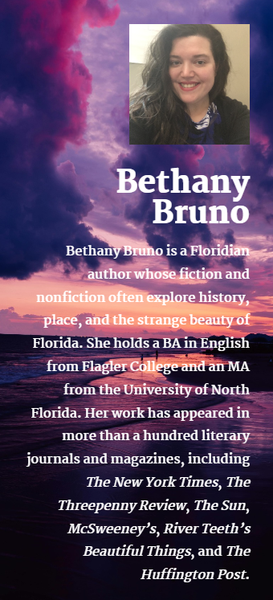
and give editors a clear sense of who you are. That little paragraph at the bottom of the page might not be the reason someone accepts your work, but it can help make you look like someone who belongs there. And sometimes, that's enough to open the next door. Author Bio: Bethany Bruno is a Floridian author. She holds a BA in English from Flagler College and an MA from the University of North Florida. Her work has
appeared in more than a hundred literary journals and magazines, including The Threepenny Review, The Sun, McSweeney's, River Teeth's Beautiful Things, and The Huffington Post. A Best of the Net nominee, she has won multiple writing contests, including the 2026 Saturday Evening Post Great American Fiction Contest. Learn more at www.bethanybrunowriter.com
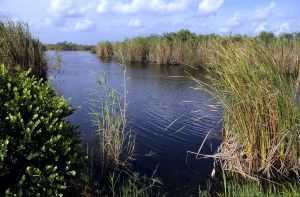
ID 1968231 © Oxlock | Dreamstime.com
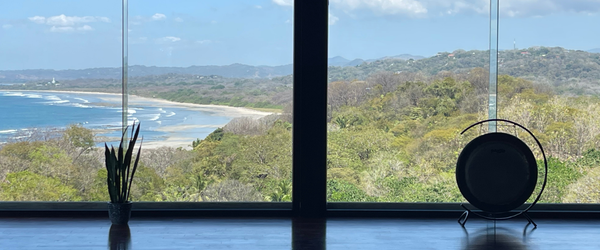
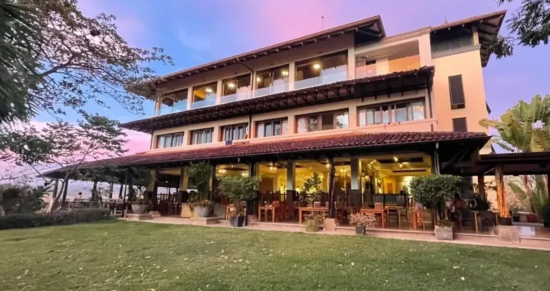
WRITING YOUR LIFE, WRITING TO HEAL Memoir Writing & Restorative Yoga Retreat Costa Rica - July 25 - August 1, 2026 Tempted to write about your precious but complex life, but too afraid to dive in? Join award-winning memoirist Zita Arocha, and yoga therapist, Lorelei Alvarez, for a one-week intensive memoir-writing and restorative yoga retreat on the Pacific coast of Costa Rica, July 25 to August 1. The
experience will spark your creativity and provide useful feedback to help you produce a polished personal essay that connects with readers. Along the journey, we'll practice restorative yoga on the beach and under jungle trees, swim in the infinity pool, meditate, explore tropical wildlife, visit a quaint beach town, and nurture our bodies with healthy vegetarian meals. Find more details and pricing at zitaarocha.com or email [email protected]. The workshop is ideal for writers, journalists, educators, and professionals with a personal story to tell. BURNSIDE REVIEW CHAPBOOK CONTEST
https://burnsidereview.org/chapbook-guidelines.html
$15 ENTRY FEE. Deadline June 30, 2026. Submit 18-24 pages of poetry, including a list of
acknowledgments. The winner will receive $200, plus ten copies of the chapbook. ADRIFT SHORT STORY CONTEST
https://www.driftwoodpress.com/adriftstorycontest
$30 ENTRY FEE. Deadline July 15, 2026. Fiction only. 1,000-6,000 word limit. Submit works written in English
only, no translations. The winner will receive $500 dollars and five copies of the anthology in which the story appears. The winner will also have the opportunity to be interviewed about their work; the interview will be published alongside the story. If a runner-up is chosen, their work will be offered publication, an accompanying interview, $200, and five copies of the issue in which their work appears. PROFORMA CONTEST
https://gristjournal.com/contest/
$20 ENTRY FEE. Deadline July 15, 2026. Grist welcomes submissions of unpublished creative work for our ProForma contest in fiction, creative nonfiction, poetry, and/or hybrids that explore the relationship between content and form. Our contest is open to all forms of literary expression. First Prize: $1,000 plus
publication in the print journal. Runners Up: publication online (along with normal payment rates). For longer works: no more than 5000 words. For shorter works: no more than 5 pieces. WASHINGTON WRITERS' PUBLISHING HOUSE CONTEST
https://washingtonwriters.org/submissions/call-for-submissions/
$28 ENTRY FEE. Deadline June 30, 2026. Seek poetry, fiction (short story collections or short novels), and literary nonfiction (memoir, essays, hybrid). Prizes include $1,500, publication, author copies, editorial guidance, and launch support. Limited to residents of DC, Maryland, and Virginia. Nonfiction and fiction 37,500-70,000 words. Poetry manuscript of between 50-80 pages in
length. THE 2026 VARIANT LIT POETRY PRIZE
https://variantlit.com/announcing-the-2026-variant-lit-poetry-prize/
$10 ENTRY FEE. Deadline June 15, 2026. For one exceptional poem. Winners will receive a cash prize and be published online in a special
Variant Poetry Prize folio, with an introduction from guest judge Todd Dillard. 1st Place $750. 2nd Place: $200. 3rd Place: $50. Submit 1–3 poems per entry (up to 10 pages total).
GRANTS / FELLOWSHIP / CROWDFUNDING WEST VIRGINIA ARTS ENTREPRENEURSHIP GRANTS
https://wvculture.org/agencies/arts/grants/
https://drive.google.com/file/d/1Wx3TKK3VK2x4BsB9cpppFu5fEfysFIoY/view
Deadline October 1, 2026. To provide up to $5,000 in support to individual artists for projects that enhance, expand or improve their work. Projects must support gaining news skills or training needed to develop a thriving arts career or art-based business. Must be a legal resident of West Virginia. IIE ARTIST PROTECTION
FUND
https://www.iie.org/programs/artist-protection-fund/
Applicants from any country and artistic discipline may qualify. Applications are reviewed for artistic merit, the quality/potential of the applicant’s work, and the severity of the threats that the applicant faces. Preference is given to artists who are facing or have recently
fled from immediate, severe, and targeted threats to their lives and/or artistic practice in their home countries or countries of residence; demonstrate accomplishment and promise in their artistic practice; will benefit their home and/or host communities. APF does not award fellowships based on financial need alone, and it does not fund individual art projects and/or programs. Eligible visual artists, filmmakers, writers, theater artists, performance artists, composers, musicians,
choreographers, traditional artists, etc. ARTIST TRUST GRANTS
https://artisttrust.org/grants/grants-for-artist-projects
Deadline June 22, 2026. Grants for Artist Projects (GAP) are unrestricted project-based grants of $2,500 awarded to 65 artists working in
all disciplines across Washington State. Funding may be used for but not limited to artist fees, materials, equipment, space rental, travel for research, documentation, professional development opportunities, marketing and promotion, support to continue a current project, support to start a new project, and many other needs related to your project. AUDIBLE/AUDIO IN COLOR GRANTS
https://airtable.com/applOIuMOqtfr8ZeG/shrYiAqHYQZuFxn9w
Deadline June 15, 2026. Audio in Color is a nonprofit grant program that funds the production of first self-published audiobooks in the romance genre. Our mission is to amplify voices and stories that have historically been underrepresented in the audiobook industry. This grant is designed to support
independent romance authors whose books reflect the multicultural, multi-ethnic, and diaspora communities at the heart of our mission. The nominated book must be a self-published romance novel (any subgenre welcome). The book must not yet exist as an audiobook. The author must hold the rights to produce the audiobook. Pay is full end-to-end audiobook production support including professional editing, mixing, and voice actors.
REACTOR MAGAZINE
https://reactormag.com/submissions-guidelines
Reactor magazine is a publisher-neutral fan community founded in 2008. We are pro-author and pro-fandom, and generally do our best to promote civil and respectful discourse about
science fiction, fantasy, and related topics. This includes opinion pieces and reviews—in terms of tone, posts should be grounded in balanced, constructive criticism. Humor is, of course, welcome—mockery and ridicule are not. POETRY MAGAZINE
https://www.poetryfoundation.org/poetrymagazine/submit
https://poetry.submittable.com/submit
Deadline June 15, 2026. Our typical essay length is about 1,500 - 2,500 words. Our current rate is $400 per published page in print for prose. Essays must touch upon poetry, the culture, or a poet. WORKS IN PROGRESS
https://worksinprogress.co/issue/how-to-write-for-works-in-progress/
Works in Progress is a magazine of new and underrated ideas to improve the world. We are interested in economic growth, technology, policy, history, metascience, cities, medical research,
aesthetics, transport, energy and much more. Expect $300 or more. GREATER GOOD
https://ggsc.berkeley.edu/get_involved/write_for_us
Greater Good, the online magazine of the Greater Good Science Center, reports on scientific findings into the roots of individual and collective
well-being, positive relationships, and compassionate behavior—what we call “the science of a meaningful life.” Greater Good offers stories, tools, and tips that make cutting-edge research practical and accessible to the general public, especially parents, educators, health professionals, business leaders, and policymakers. Greater Good typically does not accept unsolicited submissions, and we rarely accept freelance pitches. Most of the articles we publish are written by our staff, experienced
journalists, academic researchers, or other subject matter experts with experience applying “the science of a meaningful life” in families, schools, workplace, or health care settings. Personal essays (see below) are the sole exception to this guideline. Our base rate is 25 cents per assigned word. $300 for personal essays. TYPE INVESTIGATIONS
https://www.typeinvestigations.org/about/how-to-pitch/
Type Investigations is a nonprofit newsroom dedicated to transforming the field of independent investigative journalism. Our work is focused on systems, policies, and powerful entities, and we are committed to elevating stories from the communities most affected by wrongdoing. We don’t commission traditional profiles, cultural
essays, true crime stories, or epic tales of adventure. While we welcome pitches from reporters outside of the United States, your pitch must have a strong and direct U.S. tie-in. Written features generally run between 3,000 and 5,000 words — though we do publish articles that are shorter and longer. Typical budgets range from $3,000 to $6,000 (including travel and other reporting expenses, as well as the reporting fee) and are based on the submission of a detailed reporting plan. We pay a
portion of the fee upfront.
ARES PRESS
https://ares-press.com/submissions
Because we launch as a fiction house, we seek stories that ably communicate the essence of being human: the emotions and ambitions, the adventures and hardships, the wit and mistakes. The full likeness of
life, we hope, will find expression in our corpus of works. If you have written a novel, a novella, or a short story collection that you believe is worthy of a wide readership, we would like to know about it. PULLEY PRESS
https://www.pulleypress.com/submit
Pulley Press is looking for poets with
full-length book manuscripts available for publication. We are also looking for poets who would like to create a collection of poetry based on interviews and collaboration with people in their communities. HISTORY THROUGH FICTION
https://www.historythroughfiction.com/
Whether you’re an
established author or an emerging voice, we offer multiple publishing pathways that combine professional standards with personalized support. Founded by historian and author Colin Mustful, our mission is to bridge the gap between history and storytelling through well-researched, engaging, and authentic narratives. BLACKWATER PRESS
https://www.blackwaterpress.com/submissions/
We seek fiction, non-fiction, essay collections, short story collections, novellas, and memoirs that are unique, compelling, and well-written. Both agented and non-agented manuscripts receive full consideration. We do not accept erotica, poetry, kids, crime, fantasy, romance, sci-fi, horror, young adult, anything with a dragon or a vampire, current events and politics, religious/spiritual, guide
books, cookbooks. For book-length titles we prefer manuscripts to be over 30,000 words.
FUNDSFORWRITERS FINE PRINT Please forward the newsletter in its entirety. To reprint any editorials, contact [email protected] for permission. Do not assume that acknowledgements listed in your publication is considered a valid right to publish out of ours.
C. Hope Clark
E-mail: [email protected]
140-A Amicks Ferry Road #4
Chapin, SC 29036
http://www.fundsforwriters.com Copyright 2000-2025, C. Hope Clark
ISSN: 1533-1326 Our subscriber list is NOT made available to others. Use information listed at your own risk. FundsforWriters gives no warranty to completeness, accuracy, or fitness of the markets, contests, and grants although research is done to the best of our
ability. FundsforWriters finds open submission calls, contests, and markets from a wide variety of sources, including Erika Dreifus' Practicing Writer
newsletter, Erica Verrillo's blog, Authors Publish, Poets & Writers, Duotrope, Winning Writers, Write Jobs Plus, LinkedIn Jobs, Emily Stoddard, and other newsletters and online sites. Many announcements are submitted directly to FundsforWriters. All must be paying opportunities. Contests must pay a minimum of $200 first place. Submit potential listings to [email protected] **Note that FundsforWriters.com places paid advertising in this newsletter. ALL ads are related to writers and the business of writing, screened by FundsforWriters to make sure the information is suitable for writers and their endeavors to improve their careers. While the mailing list is
not sold to third parties, other parties do advertise in the newsletter, to include the occasional solo ad. You will not receive this newsletter without your permission. It's physically impossible since recipients must opt-in, giving us permission to send the newsletter. If at any time you no longer wish to receive the newsletter, click the UNSUBSCRIBE link at the bottom of each newsletter. We want you to enjoy this newsletter at your pleasure, not be forced to read anything you do not wish to
receive. Direct any complaints, suggestions, and accolades to Hope Clark at [email protected]. We are an anti-spam site. | |
|
|
|