VOLUME 26, ISSUE 20 | MAY 15, 2026 |
DON'T ASK PERMISSION I've seen a lot of writers lately, mostly newbies with 0-1 books under their belt, asking how they should do things. For instance, how to find time to write, how to avoid writer's block, when is the best time to write, how many books should they write in a year
(that one blew my mind), how much should they edit, and the list goes on. They want permission to change POV, shorten chapters, or write more than one genre. Writing is a solo assignment, people. You are your own boss. Embrace it. You can make up your own mind about any of it! This is a career in which you do NOT want to be part of a hive-mind. This is a profession in which
you are trying to shine on your own. You need to read, sound, appear unique. Sure, study the successful, but you do not collectively write. You don't want to collectively learn how to write. You want to be the voice that rings different. Dare to be brilliant. You don't learn that from Facebook and Instagram. You don't learn that from people who are groping in the dark, too. |
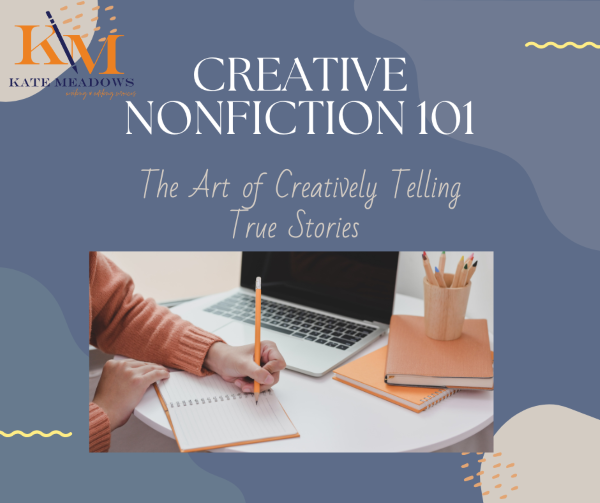
Creative Nonfiction 101: Using the Tools of Fiction to Tell True Stories
What if your real-life experiences could read like a page-turner? On Saturday, May 30, I'll lead a one-hour webinar called,
"Creative Nonfiction 101." We'll explore the art of creative nonfiction—where truth meets the creative storytelling techniques that bring it to life. You'll learn what creative nonfiction is (true stories shaped with the tools of fiction—think vivid scenes, strong characters, and meaningful arcs) and what it isn't (stretching the truth
until it breaks). Along the way, we'll look at why this genre resonates so deeply with readers and how you can begin using it in your own writing. Whether you're capturing personal memories, family history, or moments that matter, this session will give you a fresh perspective—and a few practical tools—to tell your story with clarity and heart. Kate Meadows is a published author, book coach and editor with an MFA in Professional Writing. Learn more at www.katemeadows.com. THE INSTRUCTION BOOK
A week doesn't pass that someone doesn't write me and ask what books I recommend on learning how to write well. And I never fail to go to a conference and not meet a writer who thrives on how-to-write books, with a library
of two dozen or more. To them all, I preach this: The best book to learn from is one already published, successful in its own right, in the genre you wish to pursue. Take that baby and read it. Then start over and dissect it. Underline, highlight, write in the margins, and dog-ear those pages. Cross through what you didn't like. Circle the breath-catching phrases. Underline and star the sentences you wish you'd written. Nothing beats the doing. Nothing beats learning from those who have gone before you. Nothing beats seeing greatness and backing into how it came to be. Your best instruction book isn't a how-to book. It's a how-it-was-done book. And any author worth their clout can't recall a how-to book that shaped their writing more than having read the classics, the best-sellers, and the popular
books that made them go WOW in reading them.
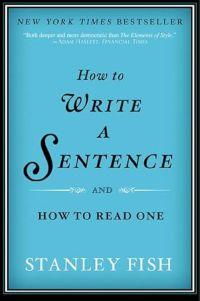
That said, I am reading How to Write a Sentence-and How to Read One, by Stanley Fish. "Fish marvels at the adeptness of finely crafted morsels, giving readers an instant play-by-play." Not a book on how to write, but a book that dissects
beautiful sentences already out in the world, teaching the how and why of their beauty. -June 4, 2026 - Chapin Library, Chapin, SC - 1-2 PM -June 13-20, 2026 - Gutsy Great Novel Retreat, Bar Harbor, Maine - Hope as author-in-residence -July 25, 2026 - Smoking Guns Sisters in Crime Zoom meeting - Noon - Zoom -August 17, 2026 - Saluda County Library, Saluda, SC - 5:30-7 PM -October 27-28, 2026 - SC Library Conference,
Columbia Convention Ctr - lunch speaker -November 15-21, 2026 - Edisto Beach, signings TBD
Email: [email protected] to schedule events, online or otherwise. “If I'm going to sing like someone else, then I don't need to sing at all.” – Billie Holiday
Your Next Marketable Skill – Writing AI-friendly Content
By Dan Brotzel The skill of writing AI-friendly content is the next evolution in SEO content writing. There’s a good deal of overlap
between the two. Commercial clients seek it, and it’s also worth knowing to optimise your own website.
Why AI-friendly content?
Basically, to help your (or your client’s) content appear at the top of a search results page. Search engines are AI-powered now, and as you’ve probably noticed, the likes of Google and Bing display AI Overviews at the top of results pages.
These summaries
pull content from multiple sources and present directly to users as an answer to the question asked in a search. If you type in ‘real-time data??’, the engine will probably think you mean ‘can you explain what real-time data is?’, and write an overview answer, with links to sources.
Content appearing in those overviews gets visibility. Adapting and ‘optimising’ content for overview catches is a writing skill in demand.
AI overviews and the SEO overlap
With traditional SEO, whole web pages were crawled by the search engine’s spiders to find the best answers to a search query. But to create AI Overviews, search engines split up or ‘parse’ content into small chunks and look for snippets that will work well as self-contained answers.
If you have ever written Featured Snippets for SEO, writing for AI Overviews will feel
familiar. Its expresses content as a series of self-contained Q&As, getting to the point fast, and adopting a crisp, Wikipedia-style tone.
Most of the key elements of SEO copywriting still apply, such as understanding search intent, writing for real people, following a logical page structure, creating descriptive headings and links, maintaining clear topical focus and using plain language. The key difference is a more pervasive focus on structuring
content into self-contained, extractable units.
Practical tips for AI-friendly writing
According to Microsoft's guidance on optimising content for AI search answers, AI search favours content that
uses explicit language, defines terms clearly and structures information logically. Learn how to:
• Write content following the inverted pyramid structure, so the key point is at the top.
• Make each para about one thing. Write paras so they can work out of context. Think of each as the answer to a user question.
• Avoid language that is overly descriptive or creative. Avoid elegant
variation. Work in search keywords but pay less attention to density.
• Use labels that are instantly meaningful, even out of context. This goes for titles, H1s, descriptions and subheads.
• Focus on structure. Use question-led writing. Put key information in the first two sentences. Avoid long introductions that delay the answer. Use descriptive subheadings that signal what each section covers.
• Break complex
topics into smaller, self-contained sections. Studio Hawk recommends writing in 40-word chunks and has some great guidance on structuring them.
• Include concrete data, such as facts, stats, sources, product names and real named experts. Keep content up to date.
• Use
bullets, lists and tables.
Making money from this skill
Many clients now expect this skill from SEO copywriters, or may be pleased with someone to guide them. The work doesn’t just extend to new content either – SEO-led clients may well need to refresh lots of their existing web content to make it more AI-friendly.
With a little digging, you’ll be able to pitch yourself as
someone with skills in ‘optimising copy for AI search’ or ‘helping content appears in AI Overviews’. More useful resources include Tomahawk's guide to writing for AI search and these tips from the Digital Marketing Institute.
AI copywriting for author sites
For your own site, the same skills apply. AI systems increasingly recommend experts and creators, so you need to explain clearly who you are and what you do/offer. An author bio that says ‘award-winning novelist exploring memory and identity’ is less effective than ‘Jo Bloggs writes
historical fiction set in 19th-century London. Her first novel X was shortlisted for the Y Award’.
BIO: Dan Brotzel’s latest novels are Thank You For The Days and The Wolf in the Woods. He also writes widely on Medium
ID 364403013 © Serhii Milekhin | Dreamstime.com
CHANGING LIGHT AWARDS
https://livingstonpress.org/contact/
NO ENTRY FEE. Deadline May 25, 2026. Livingston Press awards the Changing Light prize to one novel-in-verse per year. $500 dollar prize, 20 copies, and a standard royalty
contract. Publication will be in trade paper, e-book, and Kindle. Recommended length: 90-160 pages. THE LONDON INDEPENDENT STORY PRIZE
https://www.londonindependentstoryprize.co.uk/
£16.50 or £20.50 ENTRY FEE. Deadline May 25, 2026. We offer 25 free entries for UK
writers and filmmakers who are on a low income – for example receiving benefits such as Job Seeker’s Allowance, Working Tax Credits, Universal Credit, Disability Living Allowance, Carer’s Allowance and Employment and Support Allowance. Entry is open to everyone, nationally and internationally. Flash Fiction: 300 words, title excluded. Short Story 3000 Words. Short Screenplay 30 Pages. Feature Screenplay has no page limit. First places in the different categories are £500 to £1,000. THE ROY W. DEAN AWARDS
https://fromtheheartproductions.com/roy-w-dean-film-grants-and-awards/
$48 ENTRY FEE. Deadline June 30, 2026. Funds independent films that are unique and make a contribution to society. $3,500 first place. Many other awards and
discounts. Three projects will be honored with The Stories That Matter Awards, each with a $500 cash award. These honors recognize films that meaningfully reflect real lives, communities, and pressing social issues, stories that resonate beyond the screen and will leave a lasting impact. The $500 Britt Penrod Award will be granted to an additional film that is unique and that makes an exceptional contribution to society. INDIE AUTHOR
PROJECT
https://indieauthorproject.librariesshare.com/iap/#guidelines
NO ENTRY FEE. Deadline May 31, 2026. The winners of this contest will receive $2,500 to the 1st place winner and $500 each to two runners-up in each genre, honors at the 2027 Indie Author Day Reception, opportunities to promote your book(s)
through public libraries. Each book that is submitted to the contest must be independently published and fall within one of the following genres:
Mystery/Thrillers, Romance, SciFi, Fantasy, Historical Fiction, General/Contemporary Fiction, Memoir, Young Adult, Children's Picture Books. Limited to writers in US and Canada. SPRING FOX TALES PRIZE: FIRST CHAPTERS
https://blackfoxlitmag.com/contests/
$12 ENTRY FEE. Deadline May 31, 2026. Submit your strongest fiction (novels), creative nonfiction (memoirs), or poetry (novels in verse), and we will choose one winner with the best first chapter. The prize is $325 and print publication of their first chapter in the Summer 2026 issue. All submissions are considered for print publication in the
Summer 2026 issue.
GRANTS / FELLOWSHIP / CROWDFUNDING NEW HAMPSHIRE COUNCIL ON THE ARTS
https://www.nharts.dncr.nh.gov/grants/find-grant/arts-project-grants
Deadline May 22, 2026. Supports initiatives that use the arts to strengthen communities and
individual wellbeing, enrich K–12 learning, and promote values that encourage creativity and positive impact for the project participants, ultimately helping to build stronger communities across New Hampshire. The intended program recipients are individuals across New Hampshire, including students, families, older adults, individuals with disabilities, military and veterans, law enforcement, and those experiencing physical or mental health challenges. Requests may be made for $2,000 -
$7,500. SCRIPTAPALOOZA FELLOWSHIPS
https://fellowship.scriptapalooza.com/
$60 APPLICATION FEE. Early deadline May 1 and FINAL deadline July 1, 2026. We are accepting screenplays and pilots right now. Fellowship recipient will attend an online Robert McKee
Story Seminar receive a six-month mentorship with a producer, have access to over 90 producers thru Scriptapalooza's network, and receive advice, guidance and direction on your script. Five runners up receive lesser but similar. Every entrant get 4 pages of written feedback. MISSISSIPPI GRANTS FOR THE ARTS
https://arts.ms.gov/grants/
Deadline June 1, 2026. Applications for Mini-Grants, Artist Roster & Teaching Roster. Mini-Grants for Individuals provide up to $500 in funding for professional development, marketing, or art supplies. Artists may be included on the Artist Roster, the Teaching Artist Roster, or both, demonstrating artistic excellence and the ability to engage communities through performances, workshops, and programming. MUSES & MELANIN
https://musesandmelanin.carrd.co/
Deadline June 12, 2026. For the 2026 cohort, we are accepting the following nonfiction categories only: Creative nonfiction, Memoir, Articles, Essays. Designed for talented California creative writers of color who aspire to become professional
authors, this 7-month Fellowship is geared for people who do not yet have a lengthy list of publishing credits, are not under a publishing contract, do not have literary agent representation, and do not have a doctoral degree in English, Creative Writing, or Literature (a Master's degree in these subjects is fine, such as an MFA or MA). A Bachelor's degree is required. Admission is competitive. We are accepting applications from applicants who are local to or are able to commute to the San
Francisco Bay Area. NEW YORK FOCUS
https://nysfocus.com/pitch
We focus on decisions made in Albany and how they impact communities around the state. Send an email to [email protected] with a description of your idea and how you’ll go about reporting it. Tell us what you know
already about the subject, what else you still need to find out, and what kind of sourcing you’ll use to nail the story. Our standard rate is $800 for a story. INTERVENXIONS
https://www.latinxproject.nyu.edu/submission-guidelines
Intervenxions publishes reviews, criticism,
reporting, interviews, and essays on topics in conversation with U.S. Latinx Studies across art, politics, and culture. We aim to publish stories between 1,500 and 2,500 words. $300 for reviews (book, film, art exhibition, television, music, etc.), interviews, short essays (up to 1,500 words). $400 for original articles, profiles, and long-form content (1,500 words or more). REVENUE RULEBREAKER
https://www.revenuerulebreaker.com/contributor-guide/
Revenue Rulebreaker produces stories and events about how microentrepreneurs actually make a living online. See website for current themes and deadlines for them. Pays $200 per story. WONDERFUL WEST VIRGINIA
https://wonderfulwv.com/submission-guidelines/
Wonderful West Virginia accepts articles from experienced freelance writers on a variety of topics, including state history, wildlife and nature, cultural heritage, special places and attractions, and interesting people. Feature articles are approximately 1,500 words in length. Payment is $150 per article upon publication. NATIONAL FOREST FOUNDATION
https://www.nationalforests.org/wp-content/uploads/2026/03/NFF-Light-and-Seed-WS26-The-Response_Call-for-Pitches.pdf
Deadline May 28, 2026. Looking for story pitches for its Winter/Spring 2026 issue of Light
& Seed magazine, which will focus on how technology and innovation intersects with National Forests and Grasslands in the U.S. 1,000 words for $1,000. Send pitches to Erin at [email protected]
7.13 BOOKS
https://713books.com/
7.13 Books publishes fearless literary fiction that challenges, provokes, and stays with you long after the last page. 8th HOUSE
PUBLISHING
https://www.8thhousepublishing.com/index.php/submissiosn
Whether it's an essay, a philosophy tract, or a novel, a book of verse,send us a sample of your work (2 or 3 chapters and a full table of contents) along with a query letter to : [email protected] AFRICA WORLD PRESS
https://africaworldpressbooks.com/about-us/
Our mission is to provide high quality literature on the history, culture, politics of Africa and the African Diaspora. AMSTERDAM PUBLISHERS
https://amsterdampublishers.com/
The world's largest publisher of Holocaust stories by survivors, their children, and their grandchildren. Works with authors from Europe, Israel, the US, South American, Australia, and New Zealand.
FUNDSFORWRITERS FINE PRINT Please forward the newsletter in its entirety. To reprint any editorials, contact [email protected] for permission. Do not assume that acknowledgements listed in your publication is considered a valid right to publish out of ours.
C. Hope Clark
E-mail: [email protected]
140-A Amicks Ferry Road #4
Chapin, SC 29036
http://www.fundsforwriters.com Copyright 2000-2025, C. Hope Clark
ISSN: 1533-1326 Our subscriber list is NOT made available to others. Use information listed at your own risk. FundsforWriters gives no warranty to completeness, accuracy, or fitness of the markets, contests, and grants although research is done to the best of our
ability. FundsforWriters finds open submission calls, contests, and markets from a wide variety of sources, including Erika Dreifus' Practicing Writer
newsletter, Erica Verrillo's blog, Authors Publish, Poets & Writers, Duotrope, Winning Writers, Write Jobs Plus, LinkedIn Jobs, Emily Stoddard, and other newsletters and online sites. Many announcements are submitted directly to FundsforWriters. All must be paying opportunities. Contests must pay a minimum of $200 first place. Submit potential listings to [email protected] **Note that FundsforWriters.com places paid advertising in this newsletter. ALL ads are related to writers and the business of writing, screened by FundsforWriters to make sure the information is suitable for writers and their endeavors to improve their careers. While the mailing list is
not sold to third parties, other parties do advertise in the newsletter, to include the occasional solo ad. You will not receive this newsletter without your permission. It's physically impossible since recipients must opt-in, giving us permission to send the newsletter. If at any time you no longer wish to receive the newsletter, click the UNSUBSCRIBE link at the bottom of each newsletter. We want you to enjoy this newsletter at your pleasure, not be forced to read anything you do not wish to
receive. Direct any complaints, suggestions, and accolades to Hope Clark at [email protected]. We are an anti-spam site. | |
|
|
|