VOLUME 26, ISSUE 19 | MAY 8, 2026 |
SLOW DOWN This world of ours is fast-paced, and it takes conscious effort to slow it down. Said feelings come across in emails and social media posts from writers asking for advice. How do I publish? I'm 10K words
into my first book and can't decide who to get to publish. I need to make money and thought I'd try my hand at being a freelancer. Where are the jobs? I'm behind on rent. In both cases, the craft of writing has been totally overlooked. In the first scenario, this person hasn't learned how to write
anything book length. This could easily just be a throwaway book as they develop voice. Rarely is someone's first book worth selling, and never is someone's book worth selling after the first or second draft. Their focus should be on perfecting craft. In the second, someone feels that anyone can string words well enough to sell. And they erroneous think they'll be paid quickly. Thanks to so many indie publishing options and the AI mentality, people believe writing is a quick business that anyone can become successful in. And in so many cases the ability to write, the study of writing, the practice of writing before submission, is overlooked. Slow down and master the words first. Your odds improve so much more when you do. |
Creative Nonfiction 101: Using the Tools of Fiction to Tell True Stories
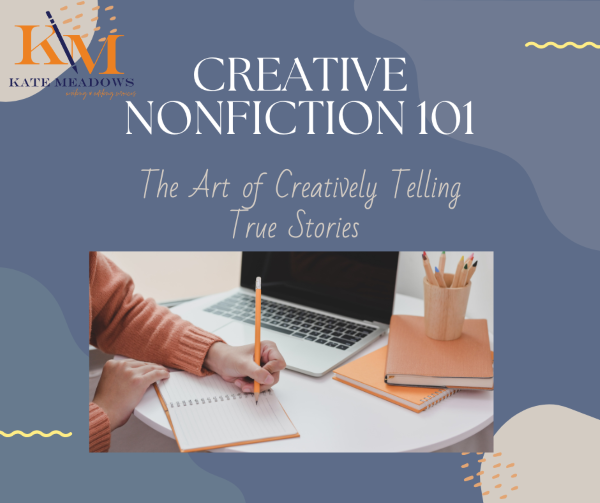
What if your real-life experiences could read like a page-turner? On Saturday, May 30, I'll lead a one-hour webinar called,
"Creative Nonfiction 101." We'll explore the art of creative nonfiction—where truth meets the creative storytelling techniques that bring it to life. You'll learn what creative nonfiction is (true stories shaped with the tools of fiction—think vivid scenes, strong characters, and meaningful arcs) and what it isn't (stretching the truth
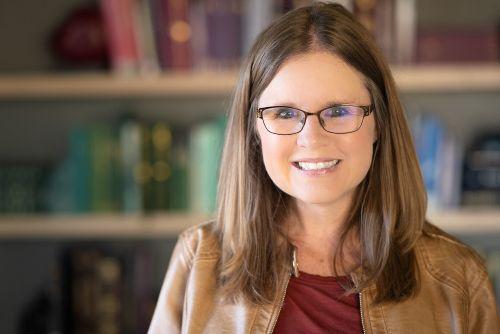
until it breaks). Along the way, we'll look at why this genre resonates so deeply with readers and how you can begin using it in your own writing. Whether you're capturing personal memories, family history, or moments that matter, this session will give you a fresh perspective—and a few practical tools—to tell your story with clarity and heart. Kate Meadows is a published author, book coach and editor with an MFA in Professional Writing. Learn more at www.katemeadows.com. BOOK COVERS
In a conversation with a bookstore owner (on the tails of last week's editorial about bookstore owners and AI), she gravitated into talk about self-published authors (she didn't call them indies). She said she has seen so many cheap and badly designed covers that they deter her from wanting
the book on her shelves. She felt the cover actually reflected on her store. Have you thought about that impact of an inexpensive cover? You may not think they can tell. They can. You forget they lay hands on the best books out there, created by traditional publishers where a lot of thought goes into what attracts a reader to pick up a book. A cover that comes anywhere near
to looking homemade gives the impression that the insides have been given the same attention and deters readers, bookstore owners, libraries, and so on. It also gives them the impression that you don't write well enough to be traditionally published. You can argue about that and call those thoughts rather cliche, premature, or uninformed, but those bookstore owners only want the best for their customers to keep them coming back. They
break a lot of sweat in their decisions to provide an attractive store. Their decisions are based upon their needs, not yours. Books have to move (i.e., get bought) in a store, and are usually given limited time to prove their worth. A bad cover never gets picked up. Invest in your book, especially the cover. The general population (and bookstore owners) use the cover as the first impression of your work. It's what opens the
door. . . or shuts it.
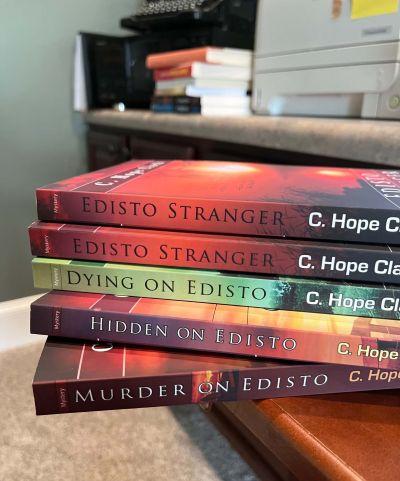
-June 4, 2026 - Chapin Library, Chapin, SC - 1-2 PM -June 13-20, 2026 - Gutsy Great Novel Retreat, Bar Harbor, Maine - Hope as author-in-residence -July 25, 2026 - Smoking Guns Sisters in Crime Zoom meeting - Noon - Zoom -August 17, 2026 - Saluda County Library, Saluda, SC - 5:30-7 PM -October 27-28, 2026 - SC Library Conference,
Columbia Convention Ctr - lunch speaker -November 15-21, 2026 - Edisto Beach, signings TBD
Email: [email protected] to schedule events, online or otherwise. “I always work on the theory that the audience will believe you best if you believe yourself.”
– Charlton Heston
How I Turned My Self-Published Book Into an Amazon Bestseller
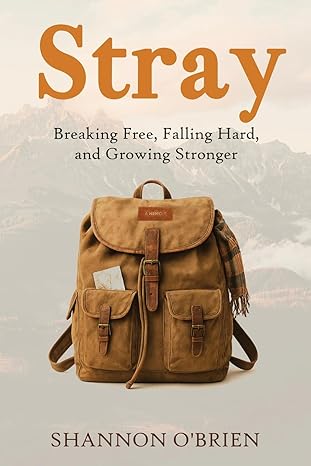
By Shannon O'Brien Launching a book as an indie author can feel overwhelming, but with a clear schedule and targeted
strategies, it can also be a source of income, reviews, and long-term visibility. I learned this while preparing my travel memoir Stray: Breaking Free, Falling Hard and Growing Stronger, and I want to share the exact steps that helped me monetize my launch. Start Early: Build Your Assets
Five months before launch, I focused on the foundation: creating an author bio, back-cover blurb, and a polished book cover. I found an editor I trusted through Reedsy. To help craft my back-cover blurb, I relied on Book Blurb Magic, whose free downloadable PDF "Unlock the Hidden Formula of Bestselling Blurbs" offered practical guidance for creating an attention-grabbing summary. To design the cover, I used 100Covers. I was impressed by their fast response time and flexibility. I went back and
forth dozens of times until I found a design I loved, all at an affordable price. For formatting, I used Vellum, and I was amazed at how easy it was, even though I'm not tech-savvy! (Be aware: Vellum only works on Mac. If you're not a Mac user, Atticus has great reviews as an alternative.) I used Canva to create shareable graphics featuring quotes from the book, genre-specific teasers, and a discussion guide for book clubs. This content became my
promotional fuel for social media, newsletters, and outreach. Outreach: Influencers, Reviewers, and Podcasts I built my website on Squarespace. Using StoryOrigin, I crafted a reader magnet to entice visitors to join my email list and linked up with other authors for cross-promotions in our monthly newsletters. I also drafted a press kit and began compiling a list of influencers, reviewers, and podcasts. Each day, I sent a few personalized messages, offering free advanced copies and explaining why my book
would resonate with their audiences. Pre-Launch: Reviews, Visibility, and Distribution
Building a Goodreads author profile and joining genre-specific groups early felt important. Instead of immediately asking for reviews, I engaged in conversations and contributed
meaningfully to the communities. This built credibility so that when I later offered ARCs (advance reader copies), people were willing to read and review. A month before launch I also ran giveaways through Indie ARC Directory, which let me distribute ARCs securely,
collect early reviews, and build buzz. I planned to publish through Amazon, IngramSpark (for bookstores and libraries), and Draft2Digital (to reach platforms
like Kobo, Apple Books, Barnes & Noble, and Bookshop.org), ensuring my book would be accessible everywhere. I also relied on Kindlepreneur, which offers a wealth of free resources for indie authors, including a step-by-step guide to set up Amazon Author Central and a helpful article on leveraging Amazon editorial reviews to boost credibility. Publisher Rocket was also an intuitive tool that helped me select the most effective keywords and categories to boost discoverability on Amazon. Launch Week: Promotions That Pay
Launch day itself was a controlled sprint. I started with 4 days at $0.99. I encouraged friends and early readers to leave reviews on Amazon and Goodreads, as reviews are crucial for visibility and
sales. Simultaneously, I ran targeted promotions via Written Word Media, Bargain Booksy, Booksends, eReaderIQ and Fussy Librarian. Each platform brought new readers and direct sales. Post-Launch: Sustain Momentum
After launch, I kept engagement high: weekly social media posts, follow-ups with ARC readers, and continued promotions through
BookRebel, BookRaid, ereadernewstoday and Robin Reads. Takeaway
A successful indie book launch is less about luck and more about preparation, consistent outreach, and smart use of platforms available. By building assets early, connecting with readers and reviewers, and leveraging tools, I turned my
self-published book into an Amazon bestseller and now you can too! Bio: Shannon O'Brien is an international school teacher and indie author. She has published a best-selling travel memoir, is working on a children's series, and writes guides for writers on book marketing, freelancing, and creative entrepreneurship. Her writing also appears on Medium, her own blog, and as guest contributions on other
sites. https://www.shannon-obrien.com/ instagram: @shannonobrien.author Linkedin: www.linkedin.com/in/shannon-o-brien-853518116
THE ROCKPAPERPOEM POETRY PRIZE
https://rockpaperpoem.com/submit
$10 ENTRY FEE (up to 3 poems). Deadline June 5, 2026. Open to anyone 18 years of age and older writing in English, from anywhere in the world. Send 1-3 of your best, previously
unpublished poems. Poems published on a blog or social media are not eligible. No theme; any subject is welcome; maximum two pages per poem. Grand Prize: $300. Two Runners-Up: $150 each. WELLS FESTIVAL OF LITERATURE PRIZE
https://wellsfestivalofliterature.org.uk/competitions/rules-competitions/
£8 ENTRY FEE. Deadline June 30, 2026. Winners will be announced at a celebratory event at 2pm on 19 October 2026 at Cedars Hall, the Festival venue in Wells. Open poetry category: top prize of £1,000, with prizes of £500 and £250 for second and third-placed winners. There is also £100 for the best entry in the category for a local poet. Poems must not exceed 40 lines of text in
length. Short story category: First prize is £750, while second and third-place winners will receive £300 and £200 respectively. There is also a special prize of £100 in the category for best local author. Stories should be between 1,000 and 2,000 words in length. Book for children category: The winning entry will receive the top prize of £750. Prizes of £300 and £200 will go to second and third-placed authors, along with £100 in the category for best local entry. The competition will judge
writing for children, age 7 and up. This includes writing for young adults. We require either the first three chapters or first thirty pages, whichever is the shortest, together with the synopsis of up to two pages. HIDDEN COMPASS PATHFINDER PRIZE
https://filmfreeway.com/hiddencompasspathfinderprize
Deadline August 1, 2026. The 2026 Hidden Compass Pathfinder Prize will award an $18,000 travel and production grant to fund an expedition and short documentary film project, as well as articles written by the expedition team for the November 2026 Pathfinder Prize issue of Hidden Compass: The Magazine. The winning expedition will produce behind-the-scenes content throughout 2026 and will premiere their
film at an in-person event in the Bay Area, California. BURLINGTON CONTEMPORARY ART WRITING PRIZE
https://contemporary.burlington.org.uk/writing_prize
NO ENTRY FEE. Deadline July 20, 2026. The winner of the Prize receives £1,000, their review is published on
Burlington Contemporary and they have the opportunity to publish a review of a future contemporary art exhibition in The Burlington Magazine. To enter the prize, entrants should submit one unpublished review of one contemporary art exhibition. Entrants must have published no more than six pieces of writing in print or online, in any language or country, prior to their submission. The review must be between 800 and 1,000 words in length and accompanied by up to three low-resolution images.
RTE SHORT STORY COMPETITION
https://www.rte.ie/radio/radio1/rte-short-story-competition/
NO ENTRY FEE. Deadline May 15, 2026. The top prize is now €5000. Writers over the age of 18 living in Ireland, and Irish writers around the world are invited
(must have an Irish passport). Story's wordcount must fall between 1800 and 2000 words. All 10 stories will be broadcast on RTÉ Radio 1. The winners of the top three winning stories will receive prizes of €5000, €4000 and €3000 respectively; the other shortlisted authors will each receive a fee of €300. GRANTS / FELLOWSHIP / CROWDFUNDING AMY LOWELL POETRY TRAVELLING SCHOLARSHIP
https://www.amylowell.org/applicationInstruct.html
Deadline October 15, 2026. Send a sample of your poetry, consisting of either up to 40 typed pages (two copies) or two copies of a
printed volume of your poetry and two copies of no more than 20 additional typed pages. Pay is $78,000. (NOTE: Only 213 applications in the last round of entries.) MUSES & MELANIN FELLOWSHIP FOR BIPOC CREATIVE WRITERS
https://shuffle.do/projects/muses-melanin-fellowship-for-bipoc-creative-writers
$25 APPLICATION FEE. Deadline June 12, 2026. A supportive, hybrid, fully funded 7-month cohort-based professional development program for talented San Francisco Bay Area creative writers of color who aspire to become professional authors. A few seats are available for ambitious out-of-towners. For 2026, we are accepting applicants working in nonfiction only. ESSERE RESIDENCY
https://essereresidency.org/apply/
Deadline June 15, 2026. Join creative people from all over the world at this 2-week residency program in beautiful Tuscany, Italy. Literature including: Fiction, Non-Fiction, Poetry, Playwriting, Screenwriting, Journalism, Songwriting. We have a few
partial fellowships available each year in the amount of €1000 off residency fees. Full price is €3400 to €3900. WORKING CLASS WRITERS GRANT FOR SPECULATIVE FICTION
https://speculativeliterature.org/grants-3/the-slf-working-class-grant/
$1000 awarded annually
to speculative fiction writers who are working class, blue-collar, financially disadvantaged, or homeless, who have been historically underrepresented in speculative fiction due to financial barriers which make it hard to access the writing world. Such lack of access might include an inability to purchase a computer, books, and tuition, or to attend conventions or workshops. Often, these writers, many of whom work more than one job, have less time to write. The application form for the Working
Class Writers Grant is only active during the open submission period 12:00AM September 1 – 11:59PM September 30 (All times UTC -4). OLDER WRITERS GRANT FOR SPECULATIVE FICTION
https://speculativeliterature.org/grants-3/slf-older-writers-grant/
$1000 awarded annually to writers who are at least fifty years of age at the time of application to assist such writers who are just beginning their careers as speculative fiction writers. The application form for the SLF Older Writers Grant is only active during the open submission period: 12:00AM May 1 – 11:59PM May 31 (All times UTC -4). THIS MAGAZINE
https://this.org/contribute/
Welcomes queries only, not already written pieces. Subject matter includes Canadian politics, culture, the arts, social issues, labour, feminism, mental health, race/racism, Indigenous issues, and sexuality, with a
focus on quality writing and in-depth reportage. Features pay between $150 and $300. Columns pay between $60 and $100. We only publish Canadian residents. THE CUT
https://www.thecut.com/article/how-to-pitch-the-cut.html
We are in a dynamic conversation with women about the
issues that matter to them most — politics, feminism, work, money, relationships, mental health, fashion, and issues relating to equality — and we’re always looking for ideas that add to that conversation. Essays and columns $500 minimum for 1,000–1,500 words. Features $600 minimum for about 1,500–2,000 words. ADI MAGAZINE
https://adimagazine.com/submissions/
Adi pays $600 USD for essays and $800 USD for graphic essays. Adi pays $250 USD for interviews. We are looking for pieces about practices, ideas, and movements that were/are suppressed by economic, socio-cultural, religious, or (neo)colonial powers. We privilege perspectives from the global majority—people of color, queer people, all marginalized peoples—as they reflect on how politics and policies influence
their daily lives. GOOD TAPE
https://goodtape.com/magazine/call-for-pitches-issue-03/
Deadline May 15, 2026. We’re looking for wide-ranging musings on chemistry in podcasting — stick to the theme or subvert it — as we continue exploring the ideas, people,
and forces shaping our industry, and we want to hear from you. Rates range from $175 to $1,050 for digital and $250 to $1,500 for print. THE OBJECTIVE
https://objectivejournalism.org/pitch-us/
Pays $0.50 a word, though particular projects may have special rates. The Objective is a
nonprofit newsroom examining systems of power and inequity in journalism: how newsrooms treat their employees, how journalists interact with their community, and what new forms of journalism can look like.
Editing That Respects Your Voice While Strengthening It At Copper Quill Editing, every manuscript is reviewed with human eyes. Specializing in: - Romance, fantasy, sci-fi, mystery, thriller, YA, and literary fiction
genres.
- Series continuity.
- Self-published and indie writers and those who work established publishing houses.
- Respect for author voice and genre conventions.
- Honest feedback.
- Reliable deadlines.
- Judgment-free collaboration.
- 100% AI-free.
Contact me at [email protected] for a free 1,000-word
sample edit. www.copperquillediting.com WORLD WEAVER PRESS
https://www.world-weaver-press.com/about.html
World Weaver Press, LLC is an independently owned and operated publisher of fantasy, paranormal, and science
fiction currently based in Albuquerque, New Mexico. We specialize in themed anthologies featuring authors from all over the world. TACHYON PUBLICATIONS
https://tachyonpublications.com/
Tachyon Publications LLC is a publisher of smart science fiction, fantasy, and horror, as well as occasional
mysteries, memoirs, young adult, and literary fiction. BLAIR PUBLISHING
https://blairpub.com/submissions
We are most interested in literary fiction, issue-driven creative nonfiction and memoir, and poetry. We will also consider regional nonfiction focused on the U.S. South. Not accepted at this
time: science fiction, horror, romance, YA. We do not accept unagented fiction, memoir, or poetry outside of our contests. Unagented nonfiction proposals may be sent to us at [email protected]. HISTORY THROUGH FICTION
https://www.historythroughfiction.com/
History Through Fiction,
along with our imprints HTF Publishing, HTF Romance, and HTF Fantasy, is dedicated to publishing high-quality fiction rooted in historical research. We are interested in stories about real people and events, with fictionalized elements that may include (though they are not required) nonfiction features like footnotes, endnotes, or a bibliography. These elements provide transparency and allow readers to explore the history behind the stories. When submitting, ensure your historical novel is both
informative and educational while being a compelling fictional narrative.
FUNDSFORWRITERS FINE PRINT Please forward the newsletter in its entirety. To reprint any editorials, contact [email protected] for permission. Do not assume that acknowledgements listed in your publication is considered a valid right to publish out of ours.
C. Hope Clark
E-mail: [email protected]
140-A Amicks Ferry Road #4
Chapin, SC 29036
http://www.fundsforwriters.com Copyright 2000-2025, C. Hope Clark
ISSN: 1533-1326 Our subscriber list is NOT made available to others. Use information listed at your own risk. FundsforWriters gives no warranty to completeness, accuracy, or fitness of the markets, contests, and grants although research is done to the best of our
ability. FundsforWriters finds open submission calls, contests, and markets from a wide variety of sources, including Erika Dreifus' Practicing Writer
newsletter, Erica Verrillo's blog, Authors Publish, Poets & Writers, Duotrope, Winning Writers, Write Jobs Plus, LinkedIn Jobs, Emily Stoddard, and other newsletters and online sites. Many announcements are submitted directly to FundsforWriters. All must be paying opportunities. Contests must pay a minimum of $200 first place. Submit potential listings to [email protected] **Note that FundsforWriters.com places paid advertising in this newsletter. ALL ads are related to writers and the business of writing, screened by FundsforWriters to make sure the information is suitable for writers and their endeavors to improve their careers. While the mailing list is
not sold to third parties, other parties do advertise in the newsletter, to include the occasional solo ad. You will not receive this newsletter without your permission. It's physically impossible since recipients must opt-in, giving us permission to send the newsletter. If at any time you no longer wish to receive the newsletter, click the UNSUBSCRIBE link at the bottom of each newsletter. We want you to enjoy this newsletter at your pleasure, not be forced to read anything you do not wish to
receive. Direct any complaints, suggestions, and accolades to Hope Clark at [email protected]. We are an anti-spam site. | |
|
|
|